Custom keycaps turn artwork, color systems, legends and brand graphics into functional mechanical keyboard products. Each project is made to order, with the keycap material, set format, profile, printing or forming method, packaging and compatibility requirements confirmed before production.
Modori Works produces custom keyboard keycaps for peripheral brands, artists, gaming communities, keyboard studios and promotional buyers. Standard PBT programs include a nine-key mini keycap set and a one hundred forty-key full keycap set with dye-sublimation. Custom resin keycaps, three-dimensional novelty designs and soft silicone artisan keycaps are available for volume programs.


Six choices define a fully custom keycap order. The approved proof and quotation capture all customization details before manufacturing begins.
Choose PBT for dye-sublimated mini and full sets, resin for handmade or three-dimensional artisan designs, or soft silicone for squishy novelty keycaps.
The nine-key mini set supports accent layouts and short themed collections. The one hundred forty-key full set supports complete keyboard coverage.
The listed PBT programs use a Cherry-profile direction. Stem, row and layout compatibility are reviewed against the target keyboard before production.
Legends, icons, color blocks, character artwork and accent-key graphics are adjusted to each keycap template and final key size.
PBT sets use dye-sublimation. Resin artisan keycaps use casting or three-dimensional printing, while silicone artisan keycaps use casting.
Individual trays or protective packing are standard by format. Custom boxes, set packaging, backing cards and retail inserts are available by project.
| SPECIFICATION | DETAILS |
|---|---|
| PRODUCT | Custom keycaps for mechanical keyboards |
| MATERIALS | PBT, resin and soft silicone according to the selected format |
| PBT SETS | Nine-key mini keycap set and one hundred forty-key full keycap set |
| PBT PRINTING | Dye-sublimation for legends, colors, icons and keyboard artwork |
| ARTISAN OPTIONS | Handmade resin, three-dimensional novelty resin and soft silicone squishy artisan keycaps |
| ARTISAN METHODS | Resin casting, three-dimensional printing and silicone casting by project |
| PROFILE | Cherry-profile direction for listed PBT set programs; compatibility reviewed by project |
| CUSTOM AREAS | Legends, colors, icons, anime artwork, escape, spacebar, WASD and accent-key designs |
| ARTWORK FILES | PSD, AI, PDF or high-resolution PNG; keycap templates and vector legends preferred |
| PROOFING | Digital proof confirming material, set format, profile, legends, colors and packaging |
| PBT MINIMUMS | Nine-key mini sets from two hundred sets; one hundred forty-key full sets from fifty sets |
| ARTISAN MINIMUMS | Volume requirements confirmed by material, structure and production method |
| PACKAGING | Protective trays, custom boxes, retail inserts and coordinated set packaging available |
| SHIPPING | Worldwide delivery with tracking and export packaging |
Buyers usually ask how legends will wear, how colors stay consistent across a set and which choices affect repeat orders or landed cost. These are the practical checks completed before a custom keycap order ships.
PBT keycap sets support regular mechanical keyboard use, while resin and silicone artisan keycaps are usually planned as accent or display-led pieces. Profile and layout compatibility are reviewed before production.
Legends, icons, character artwork and color blocks are checked at final keycap size. Dye-sublimation is used for PBT sets, and artisan details are reviewed against the selected casting or three-dimensional forming method.
Approved material, set format, profile, color references, legends, production method and packaging notes become the reference for repeat orders. This keeps later colorways, character versions and layout updates consistent.
Project cost depends mainly on material, set size, profile, number of colors or designs, artisan structure, tooling requirements, packaging and total quantity. Mini sets suit focused launches; full sets and sculpted artisan keycaps support premium programs.
Keycaps are packed in protective trays or format-appropriate packaging to reduce movement during transit. Custom boxes, retail inserts, set packaging and cartons sorted by design are available for international delivery.
Custom keycaps give keyboard brands, artists and gaming communities a functional way to turn artwork, legends and color systems into mechanical keyboard products. Buyers may search for personalized key caps, personalized keycaps, custom keyboard keycaps, custom keyboard caps or custom keycap sets while comparing the same type of project.
Custom PBT keycaps are suitable for dye-sublimated legends, full keyboard themes and repeatable retail sets. Custom resin keycaps and custom artisan keycaps are better for sculpted accent keys, character forms, three-dimensional details and soft silicone novelty concepts.
A nine-key mini set works for accent layouts, logo programs, short themed collections and launch gifts. A one hundred forty-key full set supports complete keyboard customization and broader layout coverage. Artisan keycaps can focus on one statement key or a small coordinated group.
Keycap surfaces are small and shaped, so legends need clean spacing, strong contrast and enough room around the edges. Custom printed keycaps should be reviewed on templates, with special attention to escape, spacebar, enter, shift and WASD areas.
Buyers searching for MX-compatible custom keycaps usually need to confirm MX-style stems, row profile and target keyboard layout. The listed PBT programs follow a Cherry-profile direction, while final compatibility should always be checked against the intended keyboard before production.
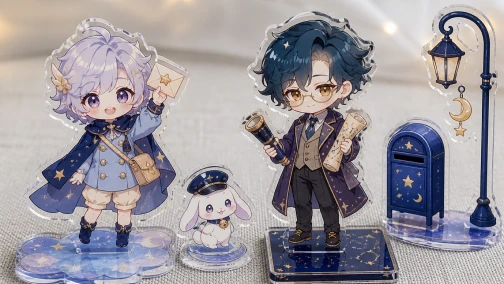
Custom anime keycaps are a strong fit for original characters, mascots and artist-owned fan merchandise. Licensed properties require proper authorization. For resin printed keycaps or sculpted artisan designs, artwork and model details should be reviewed with the selected material.
Backlit and low-profile keycap searches involve different materials, tooling and compatibility checks. They should be reviewed as separate project requirements rather than assumed under the standard PBT set programs.